Together, we solve the challenges of tomorrow.
SEE MORE →Excavation work in Knoxville represents a critical intersection of civil engineering ambition and geotechnical reality. This category encompasses the full lifecycle of subsurface earth removal, from initial site investigation and soil characterization through structural design, construction execution, and long-term performance monitoring. In a city experiencing steady infrastructure renewal and commercial development, the demand for specialized excavation expertise has never been greater. Whether for deep building basements in the downtown core, utility trenching through variable residuum, or cut-and-cover tunnel sections beneath congested corridors, each project demands a rigorous understanding of how Knoxville's unique ground conditions will behave once disturbed. The consequences of inadequate planning can range from costly delays and groundwater intrusion to catastrophic slope failures or damage to adjacent structures, making professional geotechnical oversight essential rather than optional.
Knoxville's geological setting presents a distinctive set of challenges for excavation practitioners. The region lies within the Valley and Ridge physiographic province, characterized by folded and faulted sedimentary rocks including limestone, dolomite, shale, and sandstone of Cambrian through Ordovician age. Overlying these bedrock formations is a mantle of residual soils derived from in-situ weathering, which can vary dramatically in thickness and engineering properties over short distances. This variability means that excavation contractors frequently encounter abrupt transitions between stiff clayey silts, loose sands, and weathered rock pinnacles within a single cut. Karst features are a particular concern in the limestone formations underlying parts of Knox County, where solution cavities and sinkholes can create sudden ground loss hazards and complicate dewatering efforts. For tunnel projects through soft ground, specialized analysis becomes indispensable, and our geotechnical analysis for soft soil tunnels service addresses the face stability and ground movement predictions essential for safe passage through these complex alluvial and residual deposits.
Regulatory compliance in Knoxville excavation projects operates under a framework of federal, state, and local requirements. The Occupational Safety and Health Administration (OSHA) Standard 29 CFR 1926 Subpart P provides the mandatory baseline for excavation protective systems, requiring that all trenches five feet or deeper have adequate shoring, sloping, or shielding unless excavated in stable rock. Tennessee's state-level adoption of these federal standards is enforced without amendment, though local building codes in Knoxville may impose additional permitting requirements for excavations exceeding certain depths or proximity thresholds. The Tennessee Department of Environment and Conservation (TDEC) governs sediment control and dewatering discharge through the Construction General Permit, which demands Stormwater Pollution Prevention Plans (SWPPP) for sites disturbing one acre or more. For projects involving deep excavations near sensitive structures, our geotechnical design of deep excavations service integrates these regulatory constraints with advanced numerical modeling to develop earth retention systems that satisfy both code compliance and performance objectives.
The types of projects requiring professional excavation works in Knoxville span the full spectrum of civil and building construction. Municipal infrastructure upgrades frequently involve deep utility installations through mixed-face conditions, where trench stability and worker safety hinge on proper geotechnical characterization. Commercial developments in the downtown and Turkey Creek areas routinely demand multi-level underground parking structures requiring temporary or permanent shoring walls. Institutional projects at the University of Tennessee campus and regional healthcare facilities often involve deep excavations adjacent to vibration-sensitive laboratories or medical imaging equipment, where movement tolerances are exceptionally tight. Transportation improvements along the I-40 corridor and local arterials may necessitate cut sections through dipping sedimentary strata, where daylighting of weak bedding planes can trigger slides if not properly analyzed. Throughout all such projects, continuous field verification and instrumentation form an essential feedback loop, which is why our geotechnical excavation monitoring service provides real-time data on wall deflections, settlement, and pore pressure to validate design assumptions and trigger contingency measures when needed. This observational approach closes the gap between predicted and actual ground behavior, enabling safe and efficient construction even in the most challenging conditions.
The primary risks include encountering variable residual soil depths with abrupt transitions to pinnacled bedrock, karst-related ground collapse in limestone formations, and slope instability where bedding planes dip unfavorably toward the cut face. Groundwater inflow from solution channels can suddenly increase during excavation, requiring adaptive dewatering strategies and robust contingency planning to maintain work area safety and prevent base heave.
A subsurface investigation is essential for any excavation exceeding five feet in depth, when adjacent structures may be affected by ground movements, or where OSHA requires classification of soil type for protective system design. In Knoxville's geologically complex terrain, borings and test pits should extend well below the planned excavation depth to identify potential karst features or variable rockhead that could compromise stability.
Tennessee follows federal OSHA Subpart P standards requiring protective systems for excavations five feet or deeper unless in stable rock, with daily inspections by a competent person. Knoxville projects must also comply with TDEC stormwater permits for dewatering discharge, and local building codes may mandate additional shoring submittals and vibration monitoring when working near existing infrastructure or property lines.
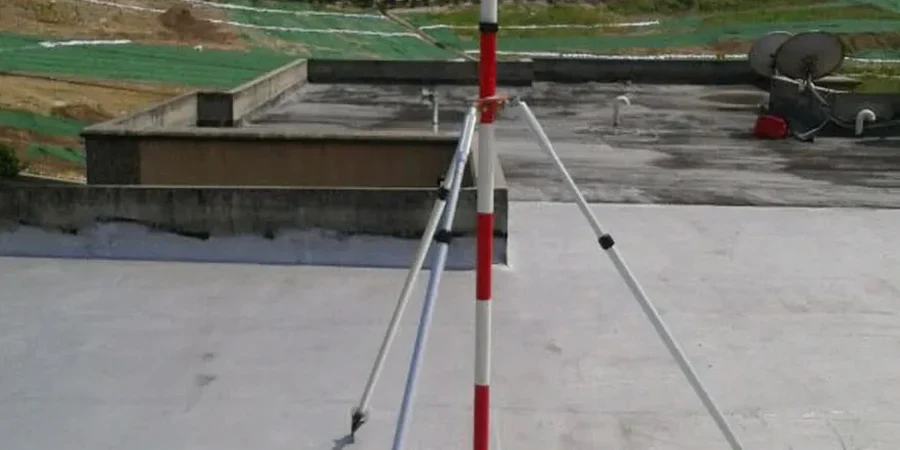
Monitoring programs typically combine inclinometers to measure lateral wall deflection, optical survey points for surface settlement, and piezometers for pore water pressure tracking. For sensitive projects, real-time automated systems with threshold alarms can detect developing instability before it becomes critical, allowing for immediate implementation of mitigation measures such as berm reinforcement or dewatering adjustments.