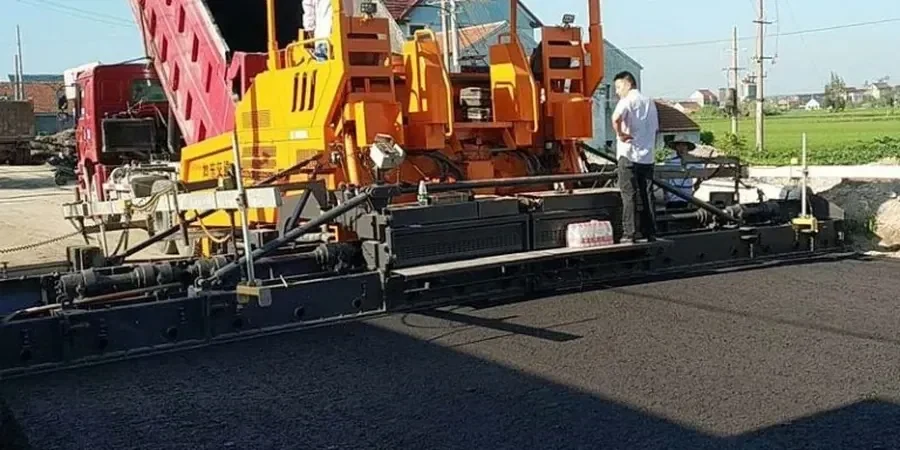
Knoxville sits at an elevation of roughly 886 feet along the Tennessee River, where the humid subtropical climate delivers about 50 inches of rain annually. That rainfall doesn’t just drain away—it swells the residual clays that underlie much of the city. A pavement that looks smooth in August can develop alligator cracking by March if the subgrade wasn’t characterized properly. Flexible pavement design here starts with understanding the moisture sensitivity of the soil. Our team connects pavement structural sections to actual subgrade conditions: we run CBR road tests on the upper 36 inches, check grain-size distribution to confirm fines content, and use those numbers to build a pavement that handles Knoxville’s wet-dry cycles without premature rutting.
Knoxville pavement failures are rarely about asphalt quality—they’re about subgrade moisture and drainage, and we design for both.
Local context
Compare two sites: one in West Hills on weathered shale residuum, another in the South Knoxville karst belt where sinkhole-prone limestone lies less than 20 feet down. Both need flexible pavement, but the risk profiles are completely different. West Hills subgrades usually compact well above 95% standard Proctor and drain moderately; the main concern is long-term clay swelling under the asphalt. South Knoxville brings differential settlement—a depression forms, water ponds, and the pavement unravels from the surface down. Our design approach accounts for these micro-regional differences: we specify geogrid reinforcement where karst features are suspected, and we adjust the pavement cross-slope to move water off the surface faster. A generic pavement section from a catalog doesn’t survive Knoxville’s limestone valleys; a section built from local subgrade data does.
Common questions
How much does a flexible pavement design package cost for a Knoxville project?
For a typical commercial lot or subdivision street in Knoxville, the combined subgrade investigation and pavement design runs between US$1,860 and US$5,540 depending on alignment length, number of borings, and lab tests required. We deliver a fixed-price quote after reviewing the site plan—no open-ended billing.
What makes Knoxville subgrades different from other Tennessee cities?
Knoxville sits on the Knox Group carbonates, which weather into high-plasticity clays with a PI often above 25. Nashville’s Ordovician limestones produce different residuum, and Memphis has thick loess. Our subgrades hold moisture longer after rain, so the pavement design has to account for reduced subgrade strength during wet seasons.
Do you use the AASHTO 1993 method or the newer mechanistic-empirical approach?
We default to the AASHTO 1993 Guide because TDOT and most Knoxville municipal reviewers still reference it, but we can run MEPDG analyses when the project scope requires it—for example, on high-volume arterials where the client wants to optimize layer thicknesses against life-cycle cost.
How many borings do you need for a pavement design?
For a linear project like a road or parking lot, we typically space borings every 150 to 300 feet along the alignment, with a minimum depth of 6 feet below proposed subgrade. For a small commercial pad, three borings are usually sufficient to capture subgrade variability.