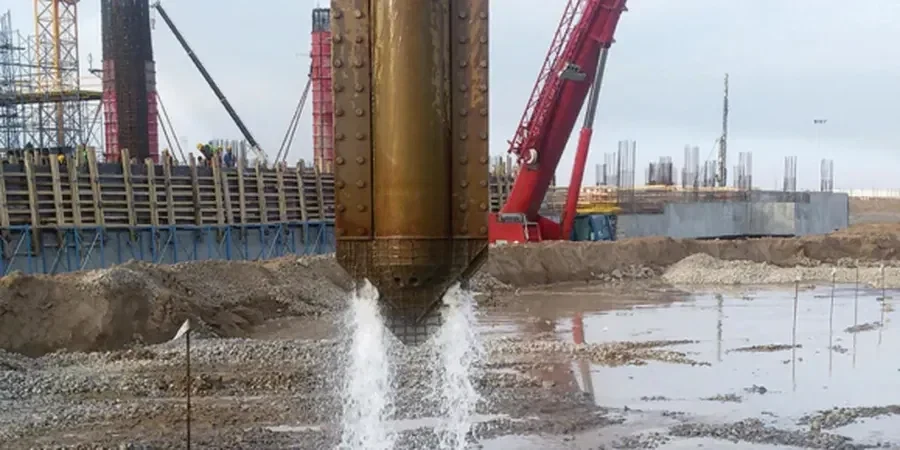
The biggest mistake we see with Knoxville site prep? Digging out loose soil and hauling it off when a densification plan would have kept the material on site. It is expensive, it blows up the schedule, and it is rarely the only option. In the valleys around the Tennessee River and its tributaries—First Creek, Second Creek—loose alluvial sands and silty sands show up where nobody budgeted for them. A proper vibrocompaction design gives the contractor a clear sequence: probe spacing, backfill specs, target SPT N-values, and acceptance criteria. We tie the design directly to the bearing capacity and settlement limits the structural engineer needs. In Knoxville’s mixed geology, where residual clays from the Knox Group can sit right next to loose stream deposits, the in-situ permeability of the matrix often dictates whether wet or dry top-feed methods will work.
Good vibrocompaction design turns loose fill into a dense, engineered mass—without trucking a single yard of soil off site.
Local context
Knoxville’s development pattern followed the water, and that means a lot of downtown and South Knoxville construction sits on former floodplain. The 1982 World’s Fair site, for example, involved substantial grading along Second Creek. When you build on these historic alluvial deposits without densification, differential settlement is almost guaranteed. The risk is not theoretical—we have seen slabs crack and utilities shear within the first two years. A vibrocompaction design that ignores the perched water tables common in the Bearden area or the variable thickness of Holocene alluvium will underperform. Our approach includes pre- and post-treatment SPT verification at every probe location the spec requires. We also check for liquefaction potential using the NCEER/Youd-Idriss method, because Knox County sits in Seismic Design Category C, and loose saturated sands are exactly the material that loses strength during the long-period shaking we can get from the New Madrid and East Tennessee seismic zones.
Common questions
What does vibrocompaction design cost for a typical Knoxville commercial lot?
For a commercial pad under two acres in the Knoxville area, the design and QA/QC package generally runs between US$1,680 and US$4,900, depending on the number of probe points, treatment depth, and the verification boring count the geotechnical engineer of record requires.
How deep can vibrocompaction treat the loose soils we find along the Tennessee River?
With standard rigs we can design for treatment down to about 65 feet. The actual limit depends on the soil profile—if the loose zone sits on competent bedrock from the Knox Group, we stop at refusal and adjust the grid to densify right to the contact.
Does vibrocompaction work in silty sands, or do we need stone columns?
It works up to a point. When the fines content stays below 12 to 15 percent, vibrocompaction is usually efficient. Above that, the silt dampens the vibrations and we often shift the design to stone columns to get both densification and drainage.
How do you verify the soil actually got denser after treatment?
We run SPT borings at specified locations before and after the work, comparing N-values directly. We also track the vibrator’s amperage during every probe penetration and withdrawal, which gives a continuous indirect measure of density improvement.