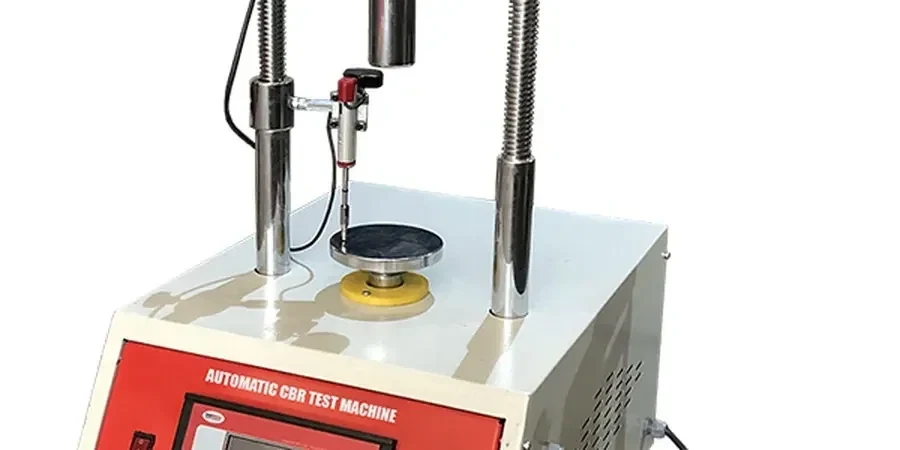
The red clay subgrades of Bearden need a completely different pavement section than the dolomite residuum in West Hills. Same city, two miles apart, but the bearing capacity can change by a factor of four. Knoxville sits at the junction of the Tennessee River and the Ridge-and-Valley physiographic province, where residual soils derived from limestone, dolomite, and shale create highly variable subgrade conditions. A standard laboratory CBR test removes the guesswork. Our lab runs soaked CBR per ASTM D1883 on remolded specimens compacted to target density, giving you the design number that dictates base course thickness. For projects near the Holston River floodplain, we often pair soaked CBR with grain-size analysis to quantify fines migration potential before finalizing the pavement structural number.
Soaked CBR values below 3% in Knoxville's shale-derived clays can require full subgrade stabilization before pavement construction.
Common questions
What is the typical turnaround time for a laboratory CBR test in Knoxville?
Standard reporting is 5 to 7 business days from sample delivery. The 96-hour soaking period is the controlling factor. Expedited unsoaked CBR results can be provided in 2 business days when project schedules require rapid subgrade approval.
What CBR value does TDOT require for subgrade acceptance?
TDOT Standard Specifications Section 207 requires a minimum soaked CBR of 6% for subgrade. Values between 3% and 6% require undercut and replacement with select material. Values below 3% mandate chemical stabilization with lime or cement before pavement construction can proceed.
How much does a laboratory CBR test cost?
A single-point soaked CBR test ranges from US$130 to US$230 depending on whether Proctor compaction data is provided by the client or performed in our laboratory. Three-point CBR curves for moisture sensitivity analysis are priced proportionally.
Can you test samples from any part of the Knoxville metropolitan area?
We accept samples from all Knox County and surrounding areas including Farragut, Powell, Halls, and Maryville. Disturbed bulk samples should be shipped in sealed bags with chain-of-custody documentation. Undisturbed Shelby tube samples from deeper formations can also be tested for CBR after remolding.