Together, we solve the challenges of tomorrow.
SEE MORE →Ground improvement in Knoxville encompasses a suite of geotechnical techniques designed to enhance the engineering properties of soil and rock for construction. This category is critical because much of the region's natural ground conditions are not immediately suitable for supporting heavy structures, pavements, or infrastructure without modification. The goal is to increase bearing capacity, reduce settlement, control liquefaction potential, and stabilize otherwise problematic materials. For developers and civil engineers in the Tennessee Valley, mastering these methods is the difference between a project that is safe, durable, and economical and one plagued by long-term performance issues and excessive foundation costs.
The local geology of Knoxville is dominated by the complex stratigraphy of the Valley and Ridge physiographic province. This means subsurface conditions can change dramatically over short distances. Along the Tennessee River and its tributaries, deep deposits of alluvial silts and loose sands are common, often with high groundwater tables. Upland areas feature residual soils derived from the weathering of underlying dolomite and limestone, which are notorious for containing sinkholes and highly variable, compressible clay seams. These conditions create a specific demand for robust ground treatment, as traditional shallow foundations on unimproved ground carry unacceptable risks of differential settlement and instability.
Design and execution of ground improvement in the United States are guided by standards from the American Society of Civil Engineers (ASCE), the Federal Highway Administration (FHWA), and the International Building Code (IBC), as adopted by Knox County. Key reference documents include FHWA's Geotechnical Engineering Circulars on ground modification and deep foundations, which deliver a framework for feasibility studies, design, and quality control. Adherence to these is mandatory for public works and highly recommended for private development to manage liability and ensure insurability. A thorough geotechnical investigation conforming to ASTM standards is the non-negotiable first step in any improvement program.
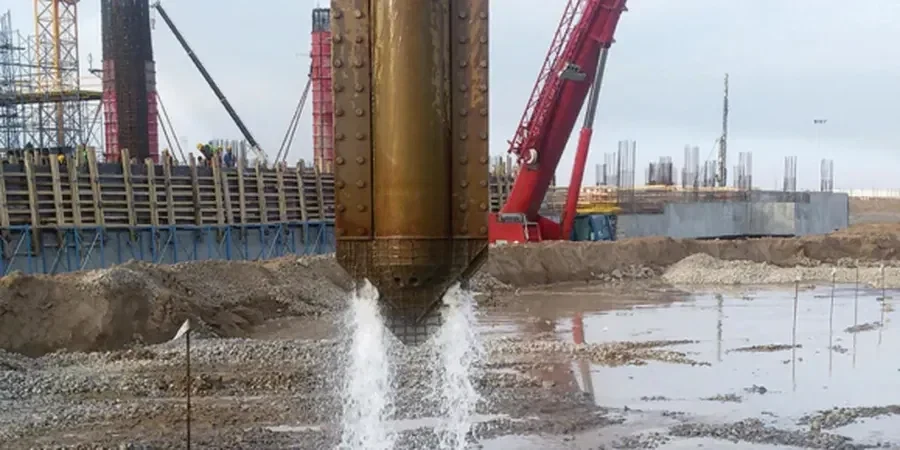
The types of projects in Knoxville that frequently require these solutions range from large-scale commercial and industrial builds to critical infrastructure. The construction of big-box retail centers and warehouses on former floodplain sites often necessitates methods like vibrocompaction design to densify loose granular fills and natural sands, mitigating settlement. For more challenging fine-grained soils or where a higher degree of reinforcement is needed, stone column design is employed to create stiff, draining composite ground. Roadway embankments over soft alluvium and the stabilization of slopes along the region's many ridgelines are other common applications. Even the installation of heavy industrial equipment inside existing facilities can demand localized subgrade treatment to meet strict vibration and settlement tolerances.
The primary purpose is to permanently alter the physical properties of a soil or rock mass to meet specific engineering performance criteria. This typically involves increasing shear strength and bearing capacity, reducing compressibility and settlement potential, controlling groundwater flow, or mitigating the risk of liquefaction during seismic events. It provides a reliable alternative to deep foundations on problematic sites.
The necessity is determined by a comprehensive geotechnical site investigation. If the report identifies loose sands, soft clays, uncontrolled fill, or high groundwater at shallow depths, improvement is likely needed. The decision is based on comparing the soil's allowable bearing capacity and predicted settlement against the structural loads. Unacceptable differential settlement or a bearing capacity below 2,000 psf often triggers the need for treatment.
Densification techniques, such as vibrocompaction, rearrange soil particles into a tighter configuration, expelling air and water to increase density and strength. They are most effective in granular soils. Reinforcement techniques, like stone columns, introduce a stronger, stiffer material into the soil matrix. This creates a composite mass that transfers load to the reinforcing elements, providing both strength improvement and drainage in cohesive soils.
Key considerations include managing stormwater runoff and sediment control per Tennessee Department of Environment and Conservation (TDEC) regulations. The potential for altering groundwater flow must be assessed, especially when using aggregate columns that create drainage paths. Vibration and noise ordinances from the local municipality may also apply, requiring monitoring during methods like vibrocompaction near existing structures or residential areas.