The subsurface contrast between North Knoxville's clay-rich residual soils and the karstic limestone and dolomite prevalent south of the Tennessee River demands fundamentally different anchoring approaches. A tieback design that works efficiently off Broadway might require complete re-engineering for a site near Sequoyah Hills, where pinnacled rock and solution channels are common. Our team works directly with the dolomite and shale formations typical of the Knox Group, designing passive anchors for soil nail walls and active post-tensioned anchors for deep excavations. We correlate anchor bond zone capacity with site-specific test pits data to confirm rock quality designation (RQD) before finalizing any design, ensuring the grout-to-ground bond stress assumptions hold true in weathered profiles.
A properly isolated anchor bond zone in Knoxville's pinnacled dolomite can transfer over 200 kips without measurable creep.
Local context
A track-mounted Klemm 806 drill rig, common on Knoxville hillside sites, sets up on a bench cut into the slope. The operator advances a duplex casing through the overburden, chasing weathered dolomite fragments that rattle inside the hole before the bit seats into competent rock. The risk nobody sees is hydrofracture during grouting: if the packer leaks and injection pressure spikes, the ground can crack open along a relict joint set—suddenly you’re losing grout into a solution cavity and the bond zone is compromised. We mitigate this by limiting grout pressure to 0.5 psi per foot of depth in fractured rock and running water pressure tests before injection. In Knox County’s sinkhole-prone areas, we also require a probe hole 10 feet beyond the bond zone to verify solid rock.
Common questions
What is the difference between active and passive anchors for a retaining wall in Knoxville?
Active anchors are post-tensioned and apply a predetermined force to the structure immediately after lock-off. Passive anchors—like soil nails—only develop resistance as the soil mass deforms. In Knoxville’s stiff residual clays, we often use active tiebacks for permanent walls above 15 feet because they control lateral movement from the start. Passive nails work well for temporary excavations where some displacement is acceptable.
How do you handle anchor corrosion protection in Tennessee’s variable weather?
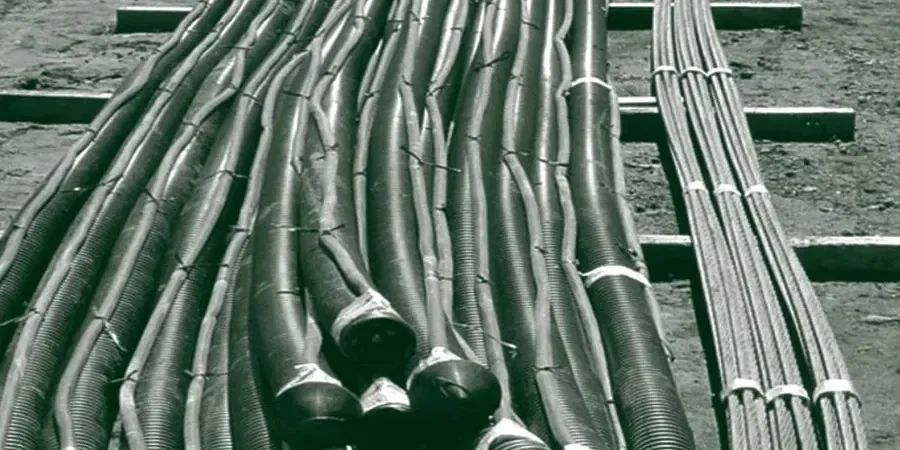
We specify Class I double-corrosion protection for permanent anchors: corrugated HDPE sheathing over the tendon, epoxy coating on the bar or grease-encased strands, and centralized spacers. The tendon bond length is grouted inside a smooth PVC duct. This double barrier handles the freeze-thaw cycles and groundwater acidity common in the Knox Group dolomite.
What is the typical cost range for anchor design and testing in Knoxville?
Anchor design fees including load testing typically range from US$1,040 to US$4,030 depending on the number of anchors, site access, and whether the job requires proof tests on sacrificial anchors. Permanent corrosion-protected anchors cost more than temporary uncoated bars.
How does the karst geology south of the Tennessee River affect anchor capacity?
The pinnacled rock surface and solution cavities in the Holston and Chickamauga formations mean we cannot assume uniform bond stress. We require probe drilling at every anchor location to verify at least 10 feet of solid rock below the bond zone. If a cavity is detected, we extend the anchor deeper or pressure-grout the void before tendon installation.