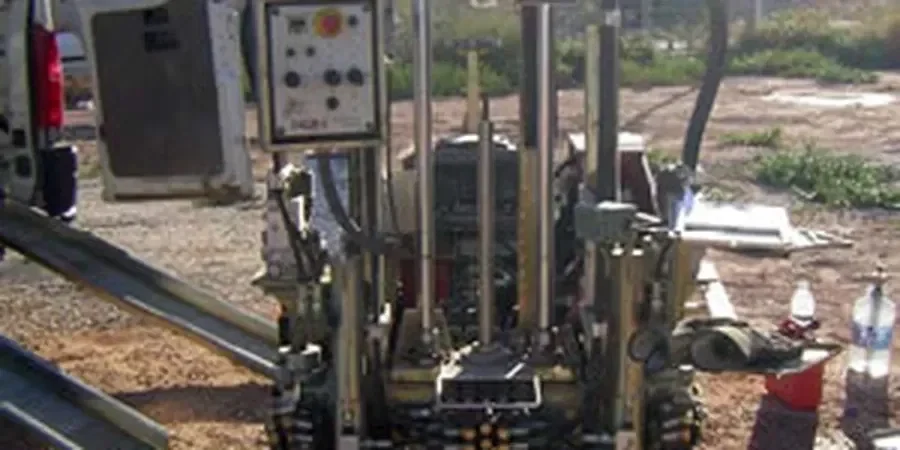
A lot of firms still try to characterize Knoxville’s subsurface with SPT alone and end up missing thin soft seams at depth. That’s where the problems start. The Holston River alluvium and deep residual clays over limestone don’t read the same on a split-spoon. We run CPT (Cone Penetration Test) truck-mounted rigs to get continuous tip resistance, sleeve friction, and pore pressure in a single push. No gaps. No remolding. The triaxial lab work then calibrates against undisturbed samples pulled only where the CPT profile says it matters. For sites near the Tennessee River terraces or out toward Cedar Bluff, we combine CPT with seismic refraction to pin down top-of-rock without drilling blind. CPT testing in Knoxville cuts through the weathered zone fast and delivers a log that engineers can use immediately for bearing capacity and settlement calculations under IBC Chapter 18.
A CPT trace shows what SPT misses: the exact depth, thickness, and consistency of every layer without disturbance.
Common questions
How deep can a CPT rig push in Knoxville soils?
Depth depends on soil density and rock depth. In the alluvium along the Tennessee River corridors we routinely reach 60 to 80 feet. In residual clays with weathered limestone, refusal often occurs between 30 and 50 feet when the cone hits competent rock. The rig applies up to 20 tons of thrust, and we stop the push when tip resistance exceeds 40 MPa sustained.
What is the cost of a CPT test in Knoxville?
CPT testing in the Knoxville area typically runs between US$190 and US$240 per push, depending on depth, mobilization distance, and whether seismic or dissipation testing is added. A full day of multiple soundings with reporting brings the per-foot cost down. We deliver a fixed-price proposal after reviewing the site address and approximate depth requirements.
Can CPT replace SPT borings for foundation design?
For many sites, yes. CPT gives continuous stratigraphy, better detection of thin layers, and direct engineering parameters without the disturbance of split-spoon sampling. However, we still recommend a limited number of SPT borings when soil samples are needed for laboratory classification or when gravel layers prevent cone penetration. The two methods complement each other.
How does seismic CPT determine site class?
The seismic cone has a geophone behind the tip. At every meter of penetration, we pause the push and trigger a shear wave at the surface. The travel time between surface source and downhole receiver gives the shear wave velocity. We use the average Vs in the top 30 meters to assign the NEHRP site class, which feeds directly into the structural engineer's seismic design parameters per ASCE 7.