Together, we solve the challenges of tomorrow.
SEE MORE →In the geologically varied terrain of Knoxville, Tennessee, the category of Slopes & Walls encompasses a critical suite of engineering works dedicated to stabilizing earth materials and ensuring long-term structural integrity. From the steep cuts along I-40 to residential developments in the foothills of the Great Smoky Mountains, managing soil and rock slopes is not merely a matter of regulatory compliance but a fundamental necessity for public safety and property protection. This category covers the analysis, design, and reinforcement of natural and man-made slopes, as well as the structural systems—specifically retaining walls—that hold back earth. A thorough slope stability analysis forms the bedrock of any project, evaluating the potential for landslides, rotational failures, or translational slides that can be triggered by the region's intense rainfall events.
The local geology of Knoxville presents unique challenges that make these works indispensable. The area is underlain by a complex stratigraphy of the Appalachian Valley and Ridge province, characterized by folded and faulted sedimentary rocks including limestone, dolomite, and shale. The residual soils derived from these formations, particularly the stiff, red clays, can be highly plastic and prone to shrink-swell behavior. More critically, the colluvium and fill materials on hillsides often contain a matrix of clay with embedded rock fragments, creating conditions ripe for differential weathering and perched groundwater tables. These subsurface conditions demand a sophisticated approach to retaining wall design, as generic solutions can be undermined by unexpected groundwater seepage or the low shear strength of weathered shale seams.
Design and construction within the City of Knoxville and Knox County must adhere to a strict regulatory framework rooted in both national and local standards. All geotechnical work is governed by the International Building Code (IBC) as adopted by the State of Tennessee, with local amendments enforced by the Knoxville Department of Plans Review and Inspections. Crucially, any slope or wall over four feet in height typically requires a design sealed by a licensed Professional Engineer. The Tennessee Department of Environment and Conservation (TDEC) also regulates construction in areas that may impact water quality, requiring a Construction General Permit (CGP) and a Stormwater Pollution Prevention Plan (SWPPP) with specific slope stabilization measures. The design of active/passive anchor design for tied-back walls must further comply with the Post-Tensioning Institute (PTI) recommendations, ensuring that the concentrated stresses are safely transferred into the competent rock or soil mass without causing a global slope failure.
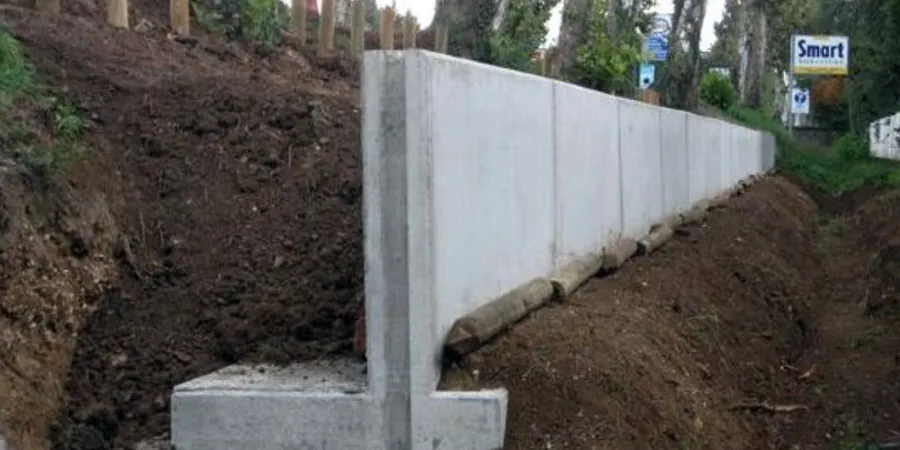
The types of projects that require these specialized works are diverse and ubiquitous across the Knoxville landscape. Commercial developments carving a pad site into a hillside along Kingston Pike necessitate tall, mechanically stabilized earth (MSE) walls or anchored soldier pile walls. Residential construction in neighborhoods like Sequoyah Hills or on the slopes of Sharp's Ridge often requires smaller, reinforced concrete cantilever walls and rigorous slope stability assessments to prevent surficial sloughing. Infrastructure projects, including road widening for TDOT or utility installations for KUB, frequently involve designing temporary shoring systems and permanent rockfall mitigation measures for cut slopes in the notoriously fractured Knox Dolomite. Each project, regardless of scale, shares a common requirement: a deep understanding of how the constructed system will interact with the native geology over decades of freeze-thaw cycles and heavy Appalachian storms.
Key indicators include tension cracks in the ground, especially near the top of a slope, newly tilted trees or utility poles, sudden appearance of springs or soggy ground at the slope toe, and bulging or leaning retaining walls. For homes, watch for sticking doors or windows and diagonal cracks in foundation walls, which can signal slope movement. If you observe these, a professional slope stability analysis is urgently needed.
A geotechnical investigation is mandated by the IBC for any retaining wall over four feet in height or supporting a surcharge. In practice, Knoxville's Plans Review department will require a sealed report that characterizes soil strength, groundwater conditions, and provides design parameters. Walls in areas with mapped landslide risk or on steep slopes over 15% will almost always require a detailed subsurface exploration to satisfy the building permit requirements.
Active anchors are tensioned after installation, immediately applying a compressive force to the slope face or wall to resist earth pressures. They are tested and locked off at a specific load. Passive anchors, like soil nails, are not tensioned; they engage passively through friction as the ground deforms slightly, developing their resisting force over time. The choice depends on the allowable movement of the structure and the in-situ soil or rock conditions.
The residual red clays are prone to shallow, surficial sloughing after prolonged rain, as water infiltrates and reduces the soil's suction and shear strength. Deeper rotational failures can occur in colluvial deposits where a weak layer of weathered shale exists at depth. A common issue is a fill slope failure, where poorly compacted material placed over a spring zone becomes saturated, leading to a sudden, rapid slide.