Together, we solve the challenges of tomorrow.
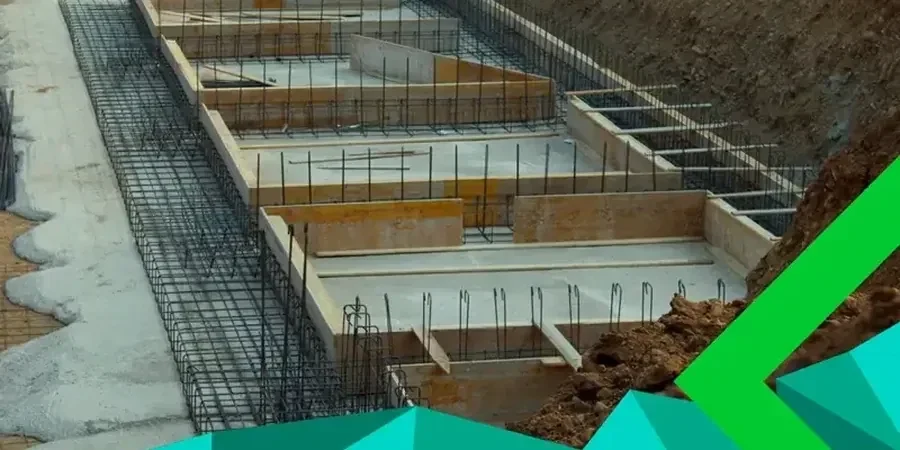
SEE MORE →Foundations are the critical interface between any structure and the ground that supports it, making them one of the most consequential decisions in any construction project across Knoxville. This category encompasses all aspects of subsurface structural support, from shallow footings and mat foundations to deep systems like driven piles and drilled shafts. In a region where topography shifts dramatically from flat river plains to steep, clay-rich hillsides, understanding local ground behavior is not optional—it is the difference between a durable asset and a costly failure. Homeowners adding a simple room extension, commercial developers erecting multi-story buildings in the downtown Innovation District, and civil engineers designing bridges over the Tennessee River all depend on geotechnical expertise to manage settlement, expansive soils, and karst features. A properly executed foundation program in Knoxville also addresses drainage, frost protection, and load path continuity, ensuring that the entire structure performs as intended over decades of service.
Knoxville's geology is dominated by the Ordovician-age Chickamauga Group, a sequence of limestone and shale formations that have weathered into a complex mantle of residual clays and silts. These soils are notorious for their shrink-swell potential, particularly the red clay derived from limestone decomposition, which can exert uplift pressures of several thousand pounds per square foot during wet seasons and shrink dramatically during dry spells. Compounding this challenge, the dissolution of underlying limestone has created a landscape pocked with sinkholes and solution cavities, especially in areas like West Knoxville and along the Pellissippi Corridor. Any foundation design here must begin with a thorough subsurface investigation—standard penetration tests, cone penetration testing, or geophysical surveys—to map rockhead depth and detect voids that could lead to sudden collapse. Ignoring these karst hazards has historically led to severe structural distress, making specialized techniques like pile foundation design an essential safeguard for many projects.
Regulatory compliance in Tennessee draws primarily from the International Building Code (IBC) as adopted by the State of Tennessee and locally enforced by the Knoxville Department of Codes Enforcement. Chapter 18 of the IBC governs soils and foundations, mandating allowable bearing pressures, minimum embedment depths, and lateral resistance criteria. Local amendments often require a geotechnical report prepared by a licensed professional engineer for any commercial or multi-family structure, detailing soil classifications, groundwater conditions, and recommendations for foundation type. For residential work, the Knoxville Residential Code prescribes prescriptive footing dimensions but still demands evaluation of expansive soils and fill compaction. Critically, construction within designated sinkhole prone areas may trigger additional review under stormwater management ordinances, as foundation drainage must not exacerbate subsurface erosion. Adherence to these standards is not merely bureaucratic—it is a legal shield for owners and designers alike.
The types of projects requiring serious foundation engineering in Knoxville range from modest to monumental. Single-family homes on sloped lots frequently need stepped footings or pile foundation design with grade beams to navigate the terrain while resisting soil creep. Mid-rise commercial buildings, such as those near the University of Tennessee campus, often employ deep foundations—drilled piers socketed into competent limestone—to bypass weak surficial clays and control total and differential settlement. Infrastructure projects like retaining walls along Neyland Drive or bridge abutments for the I-40/I-275 interchange demand foundations that can handle not only vertical loads but also significant lateral earth and seismic forces, given East Tennessee's position in the Southern Appalachian Seismic Zone. Even light industrial warehouses in the Eastbridge Business Park require careful consideration of floor slab support on potentially expansive subgrades, often integrating moisture conditioning or structural slabs. Each of these scenarios underscores why a one-size-fits-all approach to foundations is insufficient in this geologically diverse city.
Expansive clay soils and karst sinkholes are the primary culprits. The region's red clay swells when wet and shrinks during drought, exerting differential pressure on footings and causing cracking in slabs and walls. Dissolution of underlying limestone can create hidden voids that collapse without warning, leading to sudden settlement. Poor drainage, leaking utilities, and inadequate compaction of fill soils exacerbate these issues, making proper site evaluation and foundation design essential for long-term stability.
A geotechnical investigation is the only reliable method to make this determination. If soil borings reveal weak or highly expansive clays extending deeper than 5 to 10 feet, or if bedrock is highly irregular with potential voids, deep foundations like driven piles or drilled piers become necessary. Structures with heavy column loads, sensitive equipment, or located on steep slopes also typically require deep systems to bypass problematic near-surface soils and transfer loads to competent rock or stable strata.
The Tennessee-adopted International Building Code (IBC) and the Knoxville Residential Code set minimum standards for bearing capacity, frost depth, reinforcement, and embedment. For commercial and multi-family projects, a sealed geotechnical report is mandated, and the design must satisfy IBC Chapter 18. Local amendments often address sinkhole-prone areas and require specific drainage provisions. Compliance ensures structural safety, legal protection, and eligibility for insurance, while non-compliance can halt construction and void warranties.
Mitigation begins with subsurface exploration using techniques like electrical resistivity or cone penetration testing to locate cavities. Where risk is moderate, reinforced mat foundations or heavily reinforced grade beams can bridge small voids. In high-risk zones, deep foundations—particularly drilled shafts or micropiles socketed into competent limestone—bypass the soil entirely and transfer loads below any potential cavities. Comprehensive drainage design to prevent water concentration is equally critical, as water infiltration accelerates limestone dissolution and sinkhole formation.