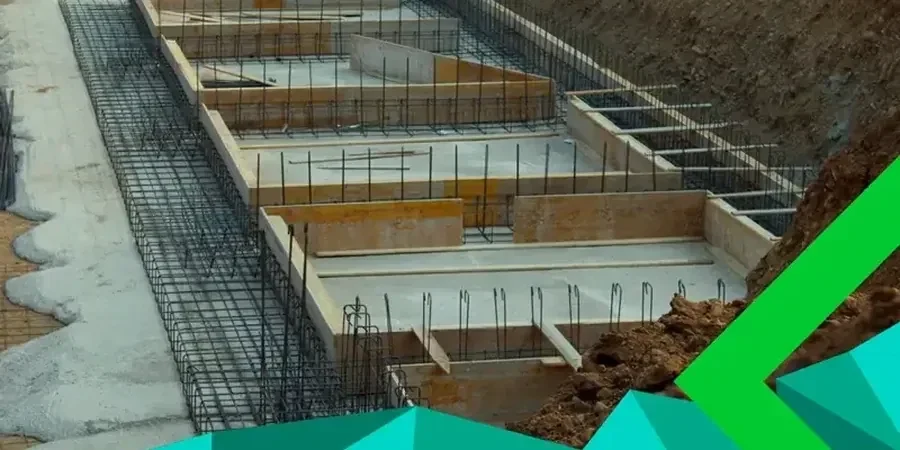
We see it too often in Knoxville: a contractor pours a spread footing based on a generic 2,000 psf assumption, and six months later the brick veneer is cracking. The residual soils derived from the local shale and dolomite bedrock don’t behave like textbook materials. You get stiff silty clay with rock fragments sitting over pinnacled bedrock, and the bearing surface can change completely in ten lateral feet. Our lab team runs site-specific borings, logs the saprolite transition, and delivers a bearing capacity number that actually reflects what’s under the slab. For sites near the Holston River floodplain, we usually pair the CPT test with lab consolidation curves to untangle the alluvial soft spots before sizing the footings.
Karst terrain under Knoxville means that two adjacent borings can show 60 feet of competent rock versus a clay-filled sinkhole — shallow foundation design here is half geotechnical logic, half geologic detective work.
Local context
Knoxville sits in a weird spot — you have the dry, stiff residuum up on the ridges and then saturated alluvium down in the First Creek and Second Creek valleys. The summer thunderstorms can dump two inches of rain in an hour, and that water has to go somewhere. If your footing drains are undersized or the backfill against the stem wall isn’t free-draining, you’ll get perched water and a sudden loss of bearing capacity right at the worst time. We also have to design for Seismic Design Category C per the ASCE 7-22 maps, so the eccentricity and overturning checks are real here — this isn’t a low-seismic zone where you can just skip the lateral analysis. In the deeper colluvium on the south side of Sharp’s Ridge, we’ve measured differential settlement exceeding an inch between footings only 20 feet apart, so we typically recommend a slightly stiffer foundation system or at least continuous reinforcement to bridge those transitions.
Reference standards
IBC 2021 (adopted by City of Knoxville, amended 2023), ASCE 7-22 Minimum Design Loads and Associated Criteria, ASTM D1586-18 Standard Test Method for Standard Penetration Test (SPT), ASTM D2487-17 Unified Soil Classification System, ACI 336.2R-88 Suggested Analysis and Design Procedures for Combined Footings and Mats, TDOT Standard Specifications for Road and Bridge Construction (when adjacent to ROW)
Common questions
How much does a shallow foundation design package cost for a typical Knoxville commercial lot?
For a standard commercial lot with three to five borings and a full foundation report, the package runs between US$1,680 and US$3,420, depending on access conditions and the number of lab consolidation tests required.
Do IBC frost depth requirements really apply in Knoxville?
Yes, technically the IBC prescribes 12 inches minimum, and while we rarely see frost heave in the valley, the building official will enforce it. We detail the embedment on the plans to avoid a red tag.
What if my site has documented sinkholes nearby?
We run a heavier investigation: more frequent borings, possible test pits, and a geophysical line or two. If the rock surface is too erratic for conventional footings, we may recommend a mat foundation or limited grouting of the upper pinnacles.
How long does the design process take from drilling to stamped report?
Typically two to three weeks. The field drilling is one or two days, lab consolidation tests need about a week to run, and the engineering calculations and peer review take the rest of the time.
Can you reuse existing fill for the bearing stratum?
Almost never, unless the fill was placed under an engineered compaction spec with density testing. Most Knoxville lots have undocumented fill with debris; we treat it as uncontrolled and recommend undercutting to natural residual soil or rock.